




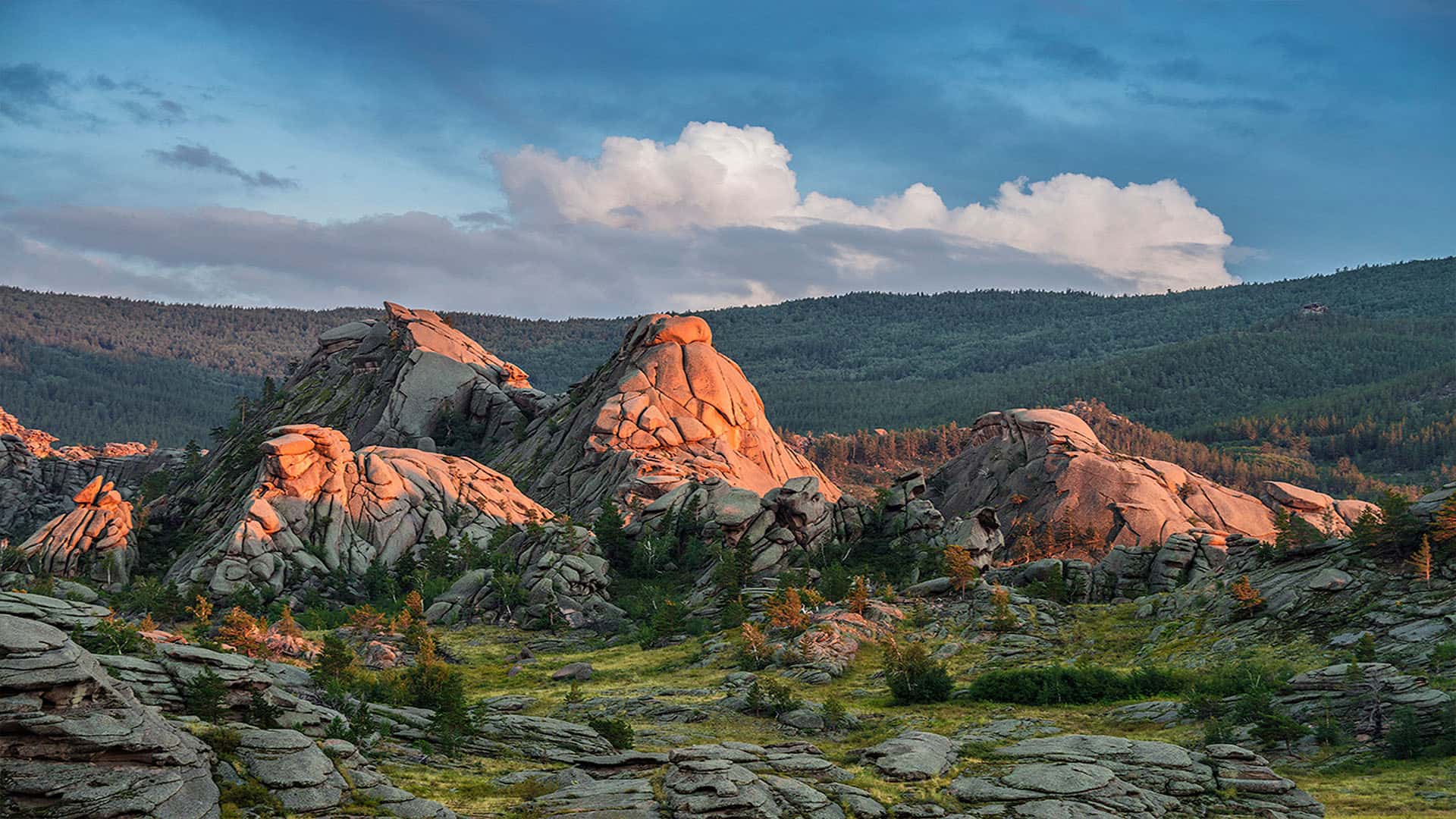

The balance between progressive thinking and conservatism is very fragile and unstable. Finding the "golden mean" between them is not easy, but vital. Leaning towards one or the other direction is fraught with irreversible consequences. Conservatism leads to stagnation and the search for truth through a false path. Excessive zeal with the help of controversial judgments leads to obscurantism, and just like a double conservatism it misleads researchers from the true path.
It is impossible to hypothesize and prove anything without axioms, impossible to discover anything without a flight of thought. Modern science has unfortunately got itself into a vicious circle due to creation of various dogmas, like electricity and radio-waves that hinder science from groundbreaking discoveries. The last 200 years have seen no particular breakthroughs. Most of the discoveries and inventions presented to us nowadays are just modernized and adapted technologies of the past, even information technology.
The current state of the global knowledge could be characterized rather by regression than progress. One of the main reasons for this, is the division of science into fields and branches. A doctor who does not understand anything in mechanics is simply dangerous for patients. A geologist who uses the false theory of evolution of species in his work does not differ much from an astrologer. All this explains, why modern science completely ignores such objects as megaliths.
Those people who don't have a degree in such branches as tectonics, volcanology, geology, petrology, soil science and mineralogy perceive megalithic objects as creations of mind. Those of them who chose a conservative approach, tend to deny any unconventional theories, just becuase they are tought to do so.
Bright-minded people on the other side, would say: "Here, I've told you! These are some relics of the ancient hyperborean civilization! There could be a temple once, where our ancestors conducted spiritual communication sessions with some far planets where they had come from".
Obviously, both abovementioned groups of people look laughable. But what's more embarrassing is that while geologists mock enthusiasts, we lose bunch of precious megalithic objects each year. Allowing to crush grand megalithic blocks with obvious traces of artificial processing under Vyborg, for selling granite to Finland on one hand, and alloting tremendous amounts of money for researching the overly explored egyptian pyramids on the other seems quite short-sighted.
But the problem, unfortunately, lies deeper. It's not just about shortsightedness and professional incompetence of scientists. Over the years of digging into this issue, I have encountered quite a few facts about deliberate concealment of information by official science and authorities. I can not assert that there is some international conspiracy behind it, but I as well can not exclude an explanation that involves a co-operation between various government and non-government organizations united by UNESCO, aimed to undermine any past or ongoing research into megalithic objects. There were more than enough reasons for such suspicions.
The first encounter with the conspiracy happened long time ago, when I just met A.Y. Sklyarov (now deceased). His reaction was just stunning: "Forget it. You don't need troubles."
But it was just the beginning in the further chain of events, which led to a number of anonymous threats that I received via email. Some of those letters even disappeared themselves, hinting at a possible interference by people with hacking abilities, which in its turn made me suspect that there might be some influential people invloved in it.
It became clear that suspicions were not groundless. And if so, the sense of dealing with this issue got more relevant than ever. We are on the right track. Yes, we do not have enough specialists, tools, access to databases, and trivial funds for conducting serious research. But has it ever been the decisive factor? No. Therefore, me and my friends and colleagues around the world, independently continue to rake up the debris from lies and conjectures, and continue to accumulate and systematize information about the so-called megaliths (megalithic remnants).
The day will come when all the data we've been accumulating will let us create a laboratory for researching megaliths on a strictly scientific basis, not just an amateur one. And while there is no organized force, capable of resisting official science and authorities, the only remaining thing to do is to continue doing what's been done. Accumulate and systematize, share the information with the public, in hope to ignite more interest in ordinary people and eventually make the concealment of true information impossible.
My first publication about megalithic objects was an article about the remnants at the Armansky passage near Magadan ("Machu Picchu and Magadan - Brother Cities") . But I'd like to continue with a story about a place called Bayanaul, located in Pavlodar region of Kazakhstan. Particularly about Bayanaul National Park.
The park was founded in 1985, making it Kazakhstan's first national reserve. It was created to preserve and restore the natural flora and fauna found in the Bayanaul mountain range. The park's total area is 68,453 hectares, which includes various recreation centers and tourist attractions, like lakes Jasybay and Toraygir.
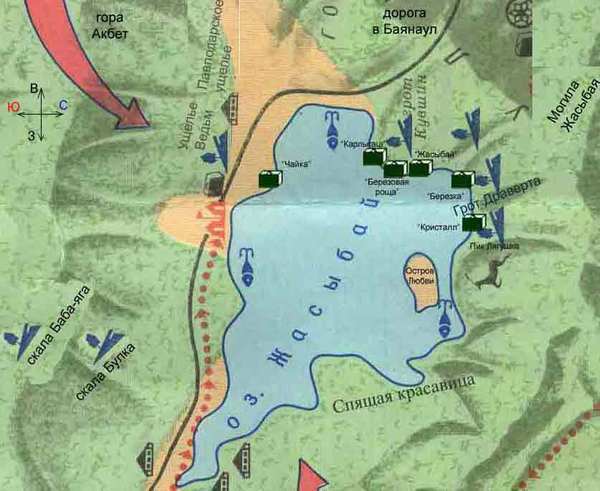
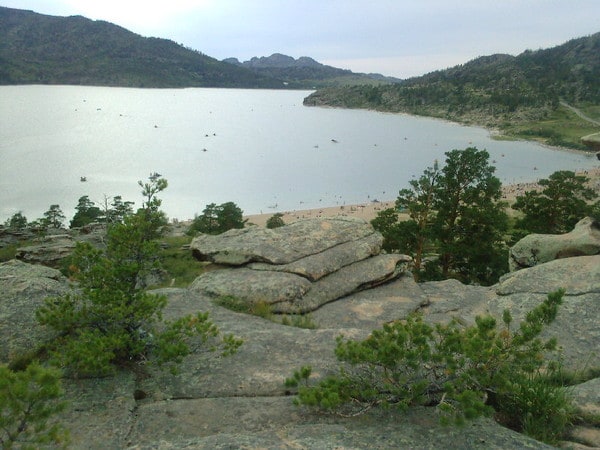
Bayanaul mountains stretch for 40 - 50 km from west to east, 20 - 25 km from north to south. The highest point is Mount Akbet, reaching 1026 meters. Mountain-forest oasis occupies an area of 450 km² and attracts tourists by quaint rocks, beautiful lakes, caves and grottoes, steep narrow gorges.
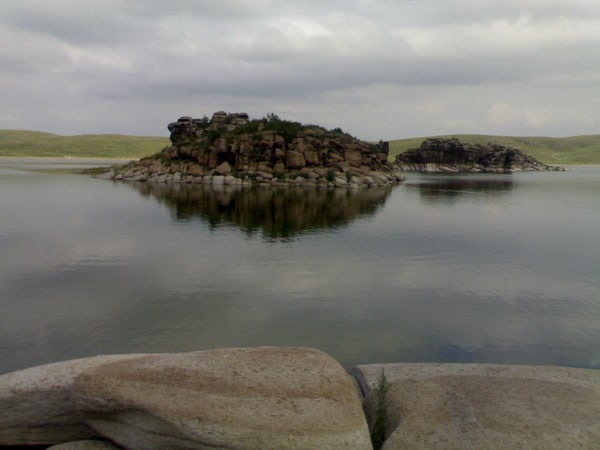
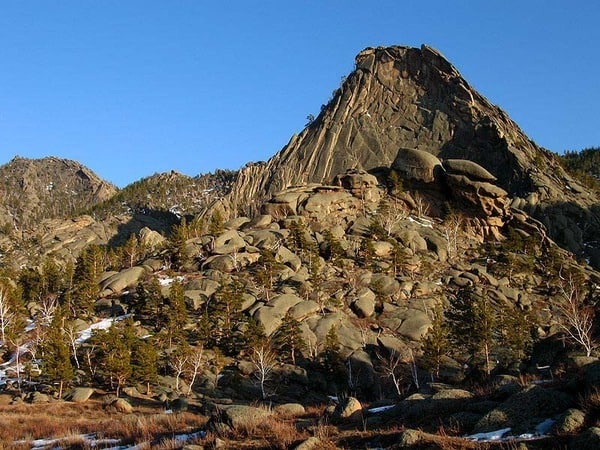
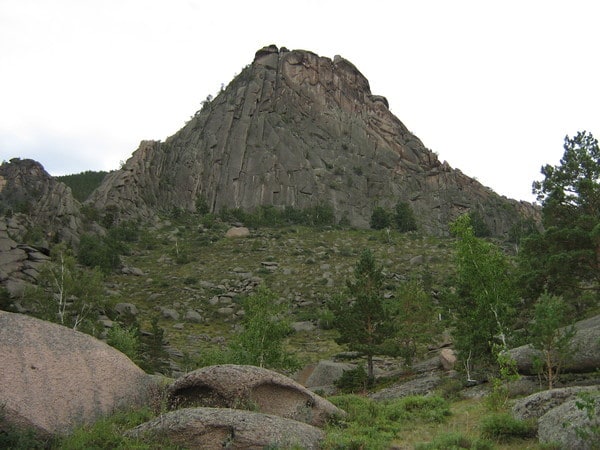
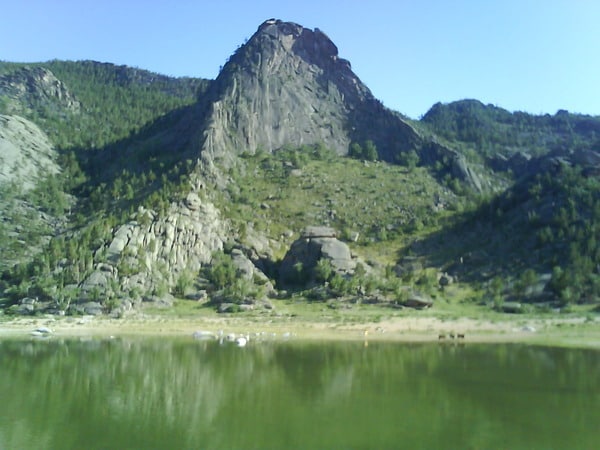
Does it remind you of anything? For the umpteenth time, in places with "wonderful monuments of natural architecture" we find mountains, which turn out to look so much like transmitting devices. More precisely, like parabolic long-distance communication antennas.
The scale of deterioration is surely enormous, however, imagination easily "paints" the original look.
Legends about Tartary, which fell through the ground, begin to acquire visible lines. And the reason for it to "fall", was not just the destructive impact of natural erosion, lasting for millions of years, but rather some catastrophic processes that have led to massive changes in continents' shape and elevation, turning mountains into stony plateaus and rising the seabed.
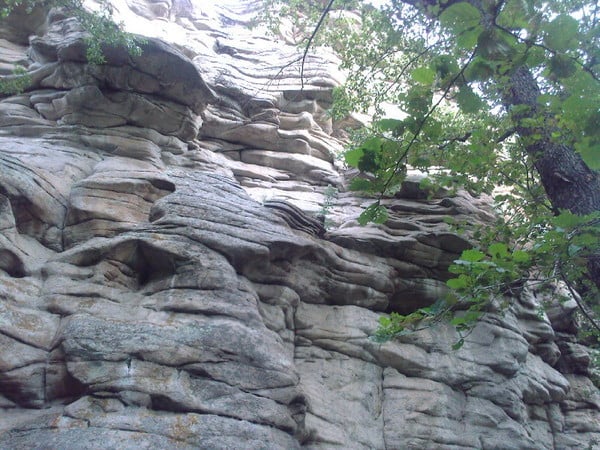
Geologists say that isolated rock blocks remain after the destruction of some more unstable rocks by any exogenous factors, such as weathering, erosion, water impact, etc. And in fact they are right. But I am sure that these rocks are remnants, and I would even say - remnants of something, not necessarily of natural origin, or, not only natural.
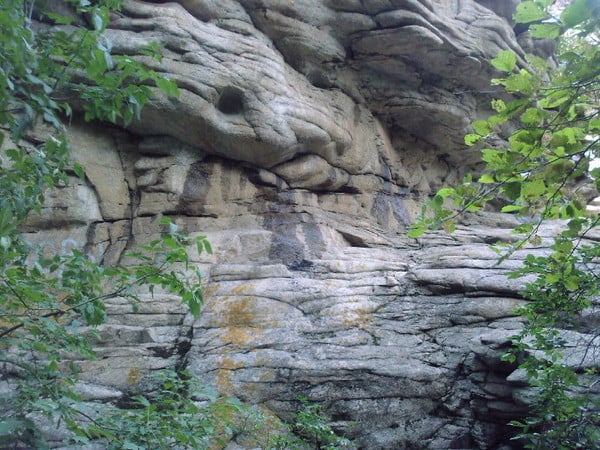
The process of formation of the remnants is quite understandable, but the hole in the rock looks rather strange. Such holes are found quite often. Moreover, sometimes, the edges of such holes have clear beads of regular cylindrical shape, differing in mineral composition from the rock in which they are contained. Personally for me, there is virtually no doubt that these are real pipes that literally diffused into the surrounding monolith wall.
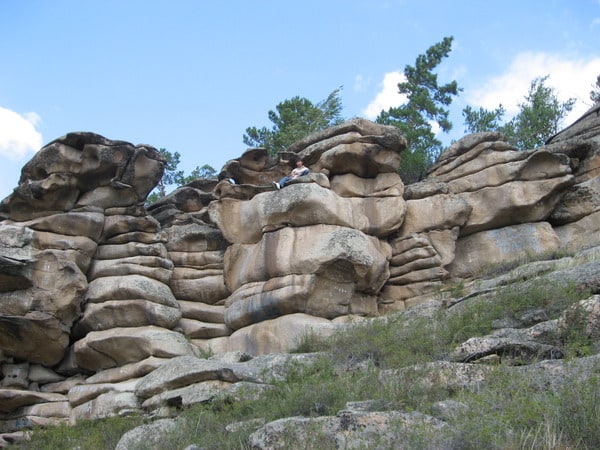
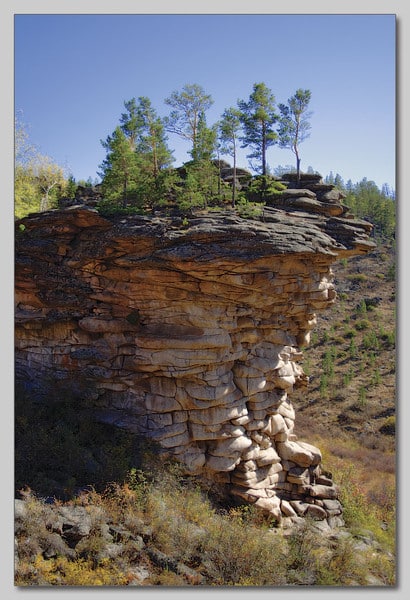
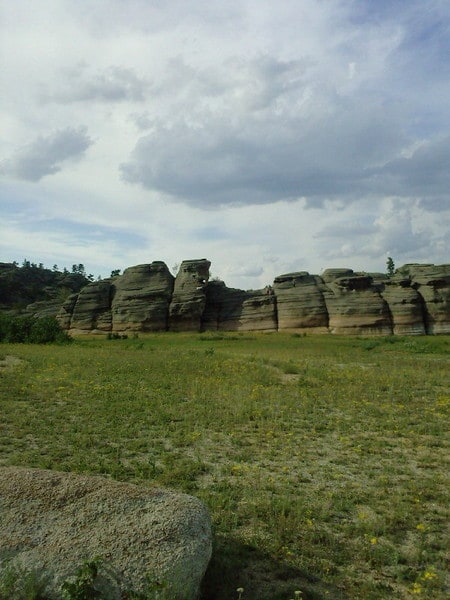
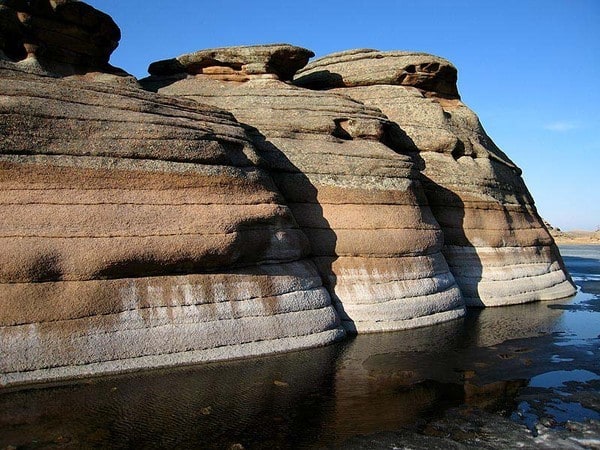
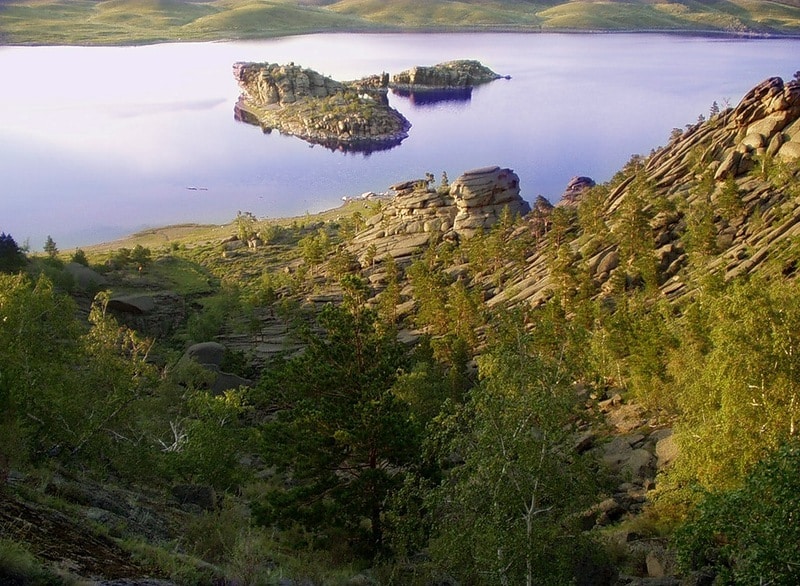
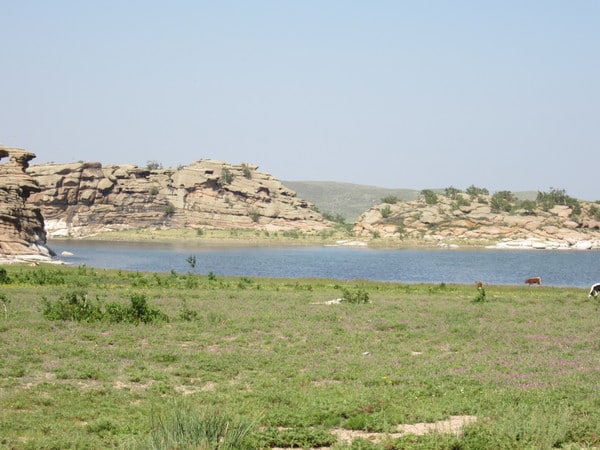
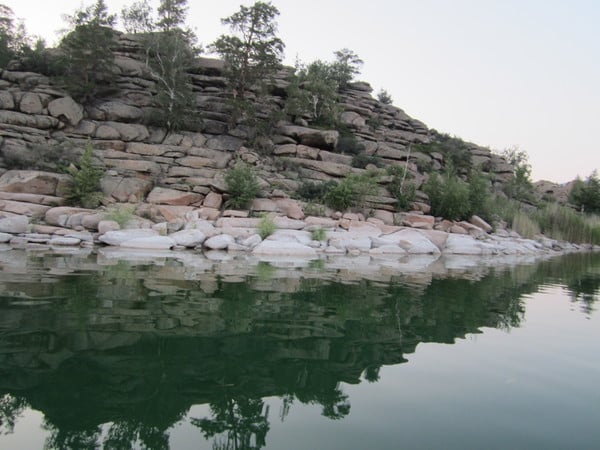
This photo vividly shows how the water level in the lakes drops. It is quite clear that not so long ago, a large part of the complex was under water. It is the water that gave the granite such rounded forms.
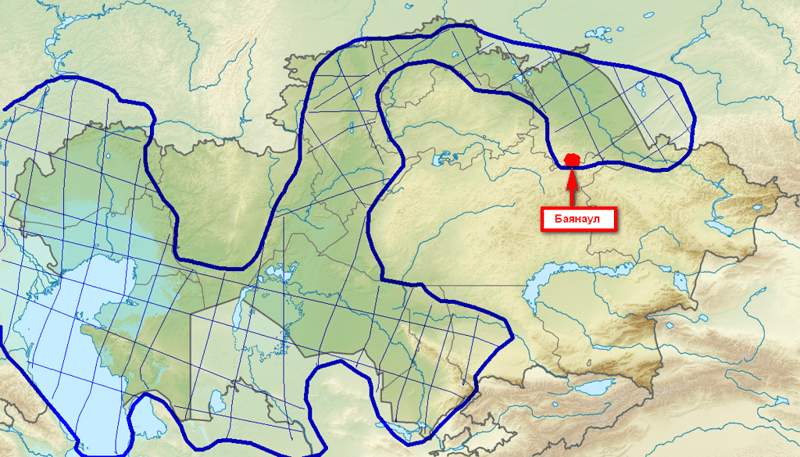
The supposed boundaries of the ancient sea, on whose bank the megalithic city was located, are marked with a blue marker.
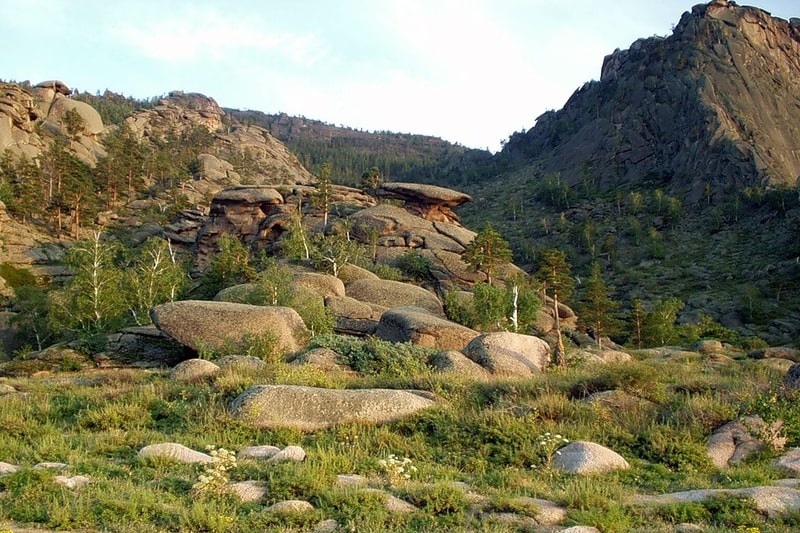
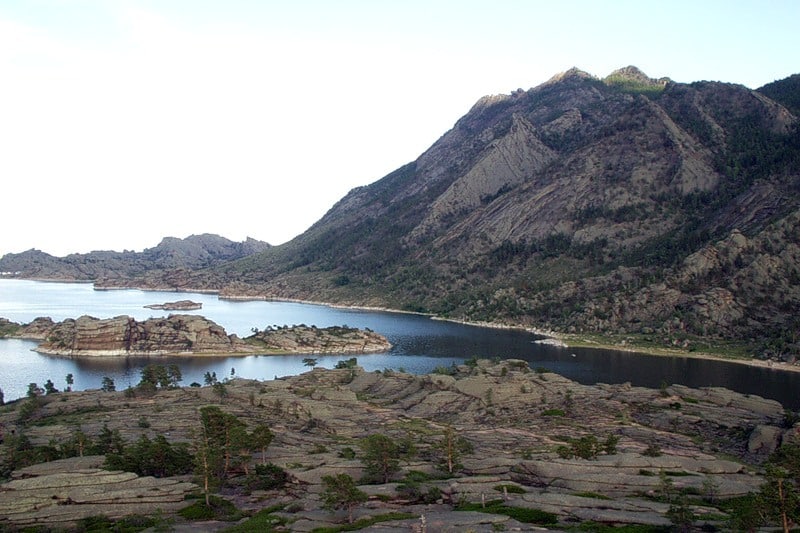
It is obvious that the formerly horizontal structure was overturned during tectonic squeezing and now lies as if being on its side. Structures that have deviated from the horizon less, are preserved better.
You don't need much imagination to see an ancient wall, whose right wing has tilted and gone underground, exposing a break in the center. Natural erosion completed the process of transforming a megalithic building into a nature reserve.
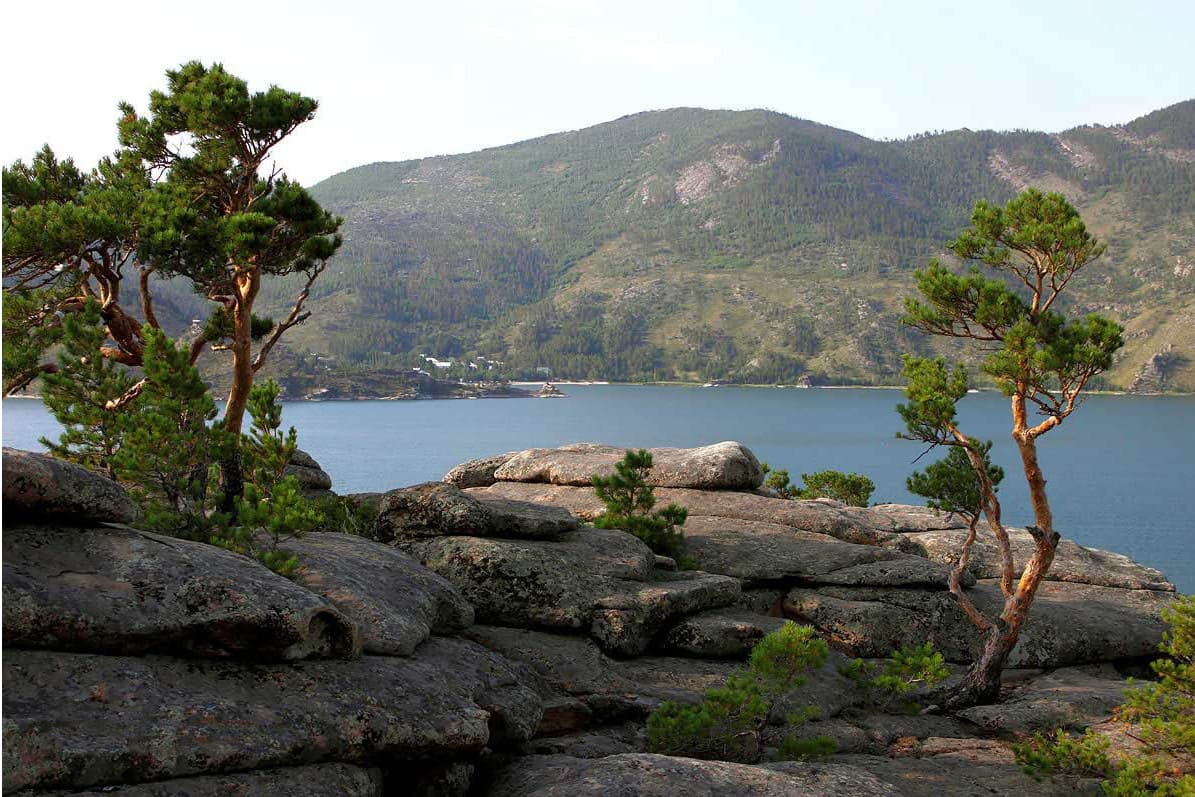
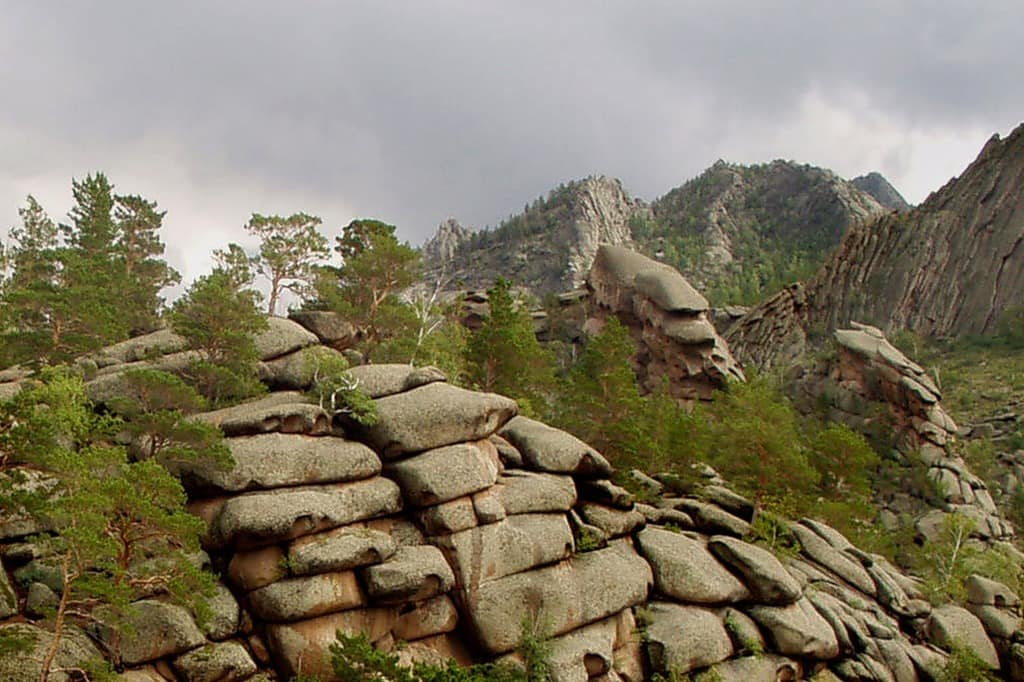
Geologists say that spreading magma creates such layers of varying thickness and then freezes. Then another layer of lava is spilled onto the cooled layer, which, when frozen, creates another layer. And then, a ready-made multilayered "cake" consisting of original stone layers begins to crack in the course of time, creating vertical "seams" that are usually taken by amateurs for stonework. And this is what I agree on with geologists. The external similarity with stonework should not lead us astray. Then why do I assert that we have an artificial creation before us? It is a question to be explained thoroughly, but a bit later.
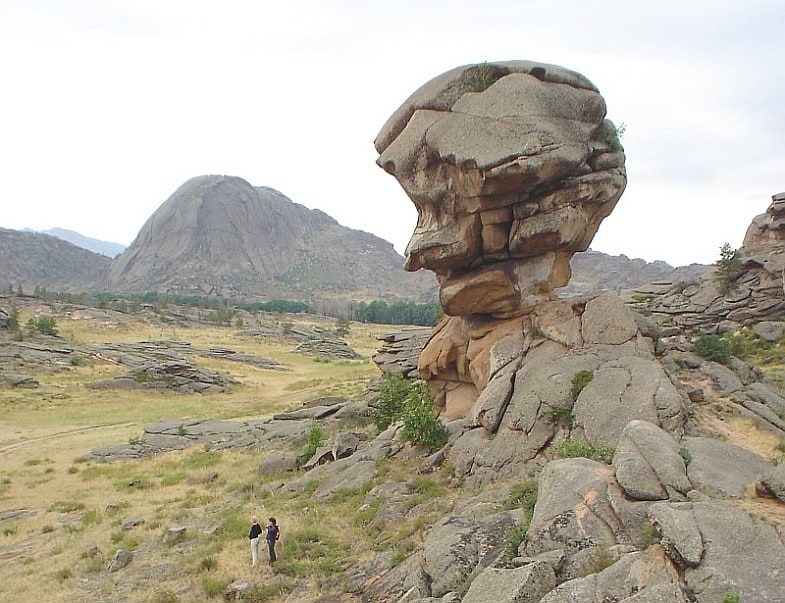
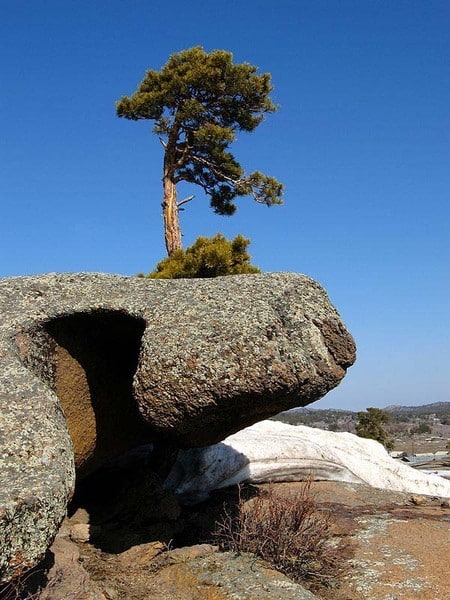
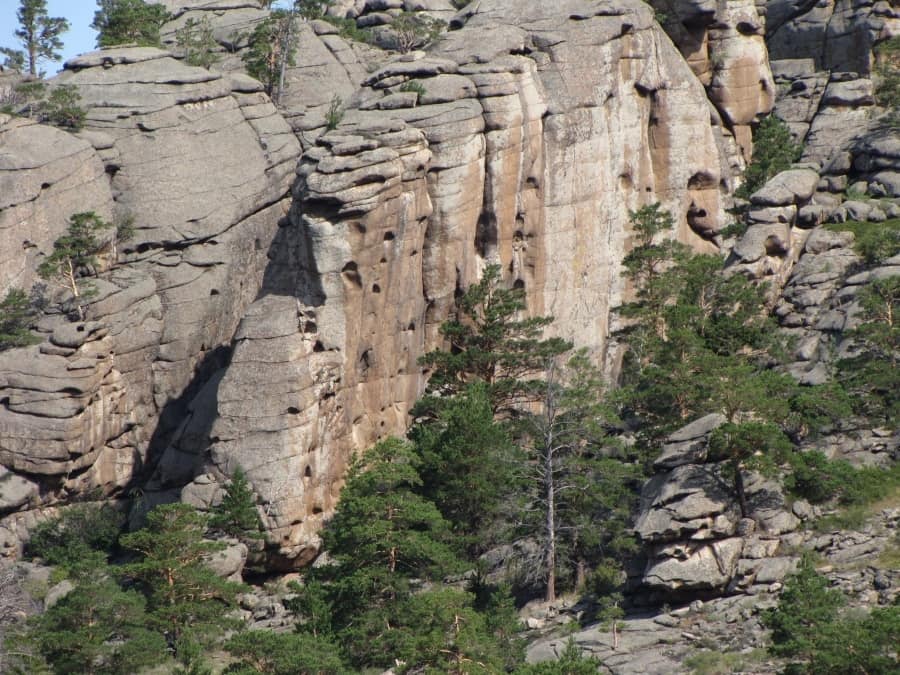
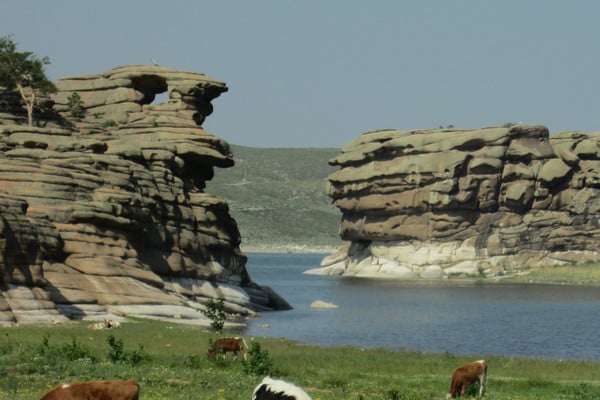
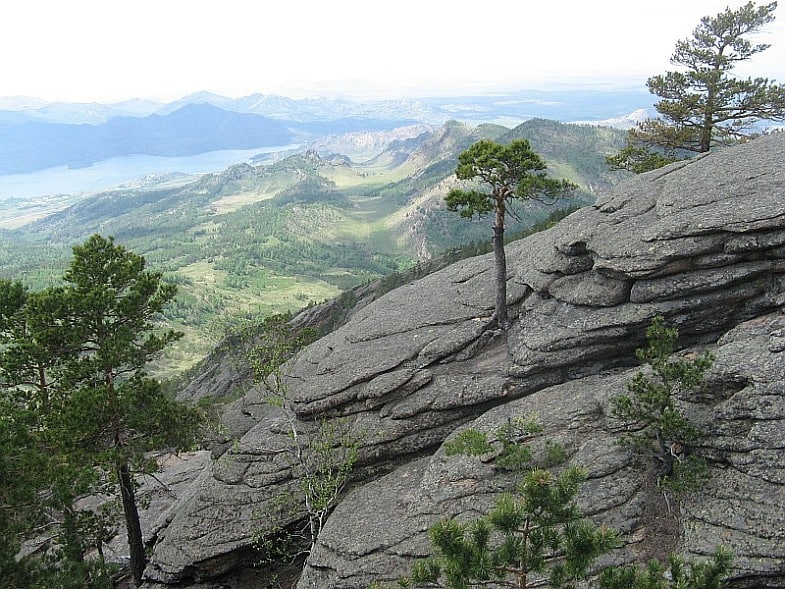
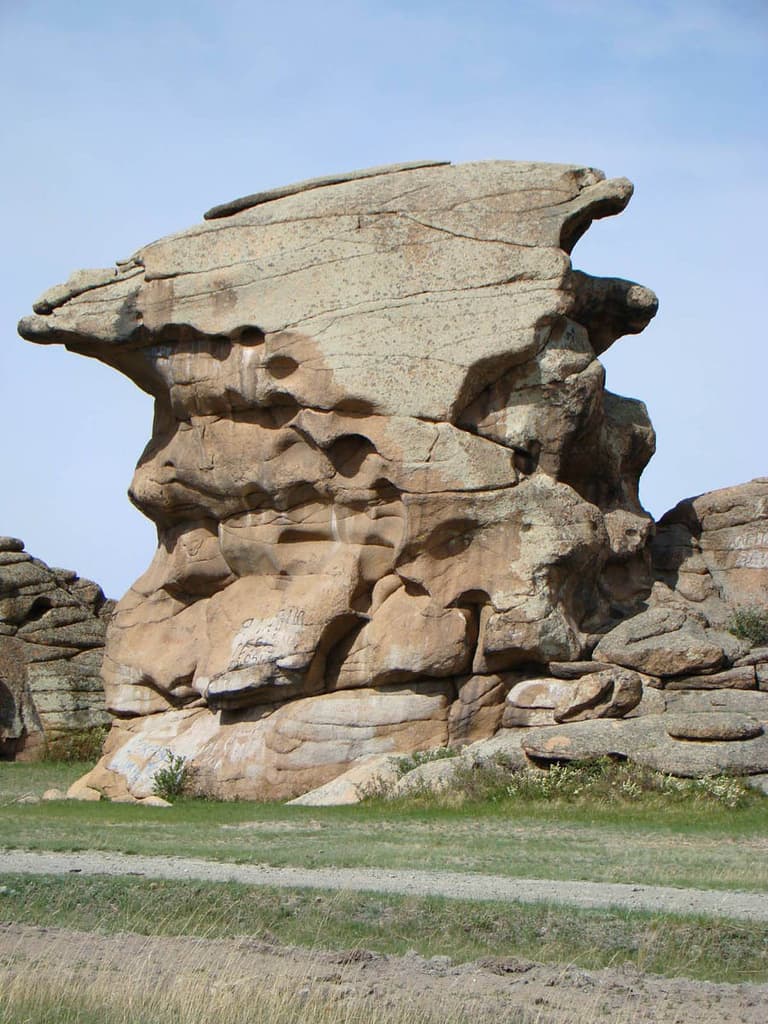
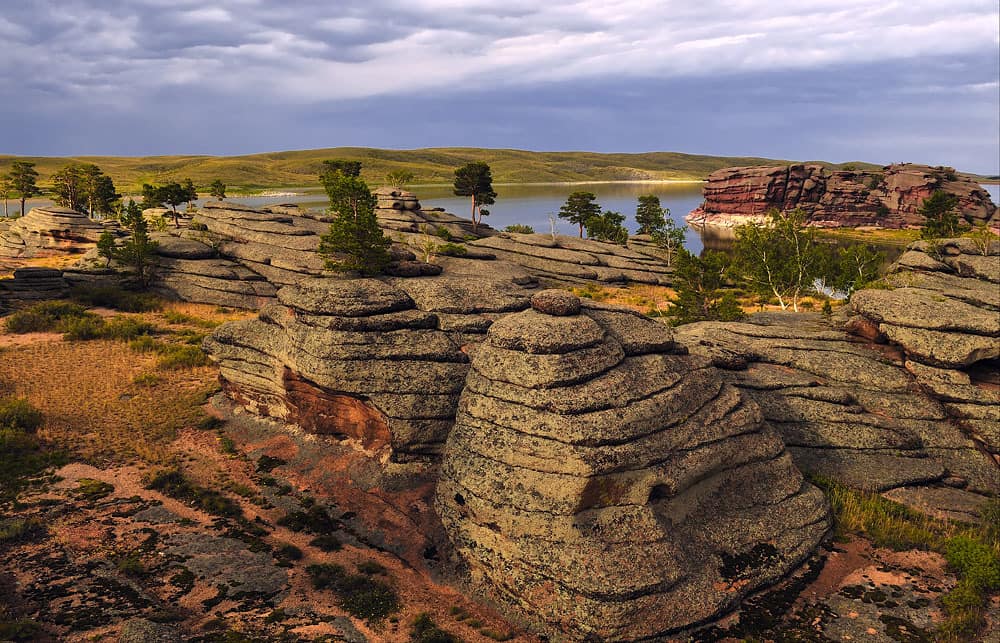
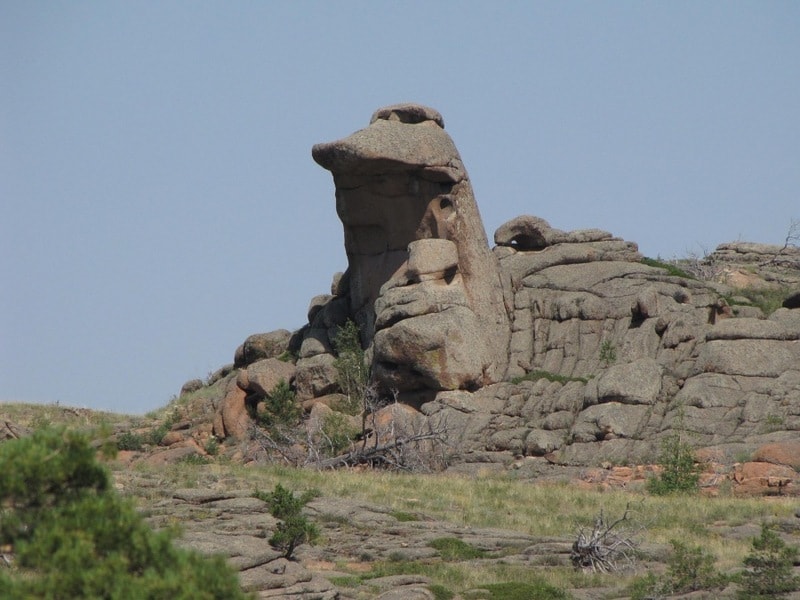
The names of the rocks are rather bizarre - "Baba Yaga", "Stone featherbeds", "Horse head", "Dove". And each of them is surrounded by various legends. The majority of names found on map of the region were given in the period of Russian Cossacks' reclamation of Turkestan, while all the humorous nicknames of rocks date back to the second half of the twentieth century. Could there not have been other names before?
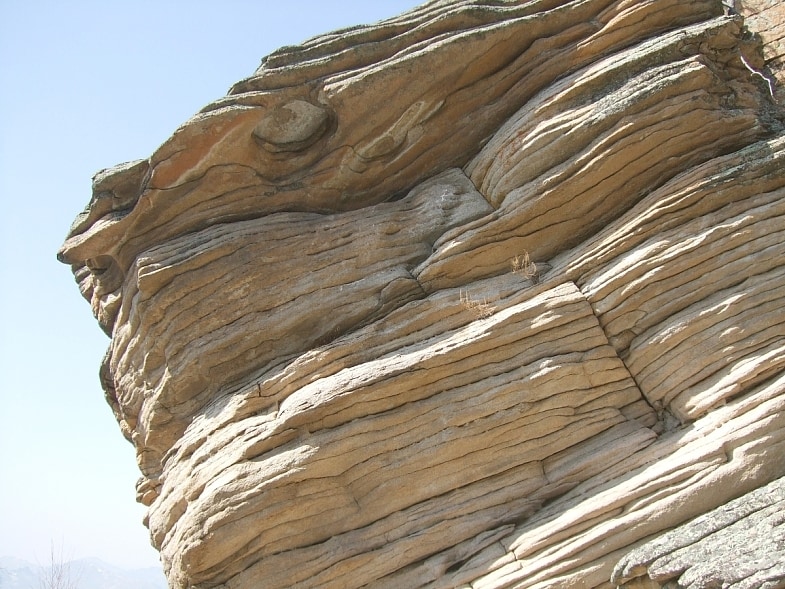
Here we see a completely different picture. These are not magmatic rocks, it is bed-silt –sandstone. This is a reminder of the continued existence of sea in the territory of present-day Kazakhstan. Longstanding and relatively recent.
There is nothing surprising that the remnants form walls similar to fortifications. We could assume that molten lava filled some cracks in softer rocks, which were later destroyed by erosion. Or, perhaps, the lava did not flow, but was squeezed out of the bowels of the earth. However, I reject this suggestion due to improbability, because in that case remnants would not have the "pancake" structure. But ... there is some sense in these structures. They are not located chaotically, as if it was created by nature.
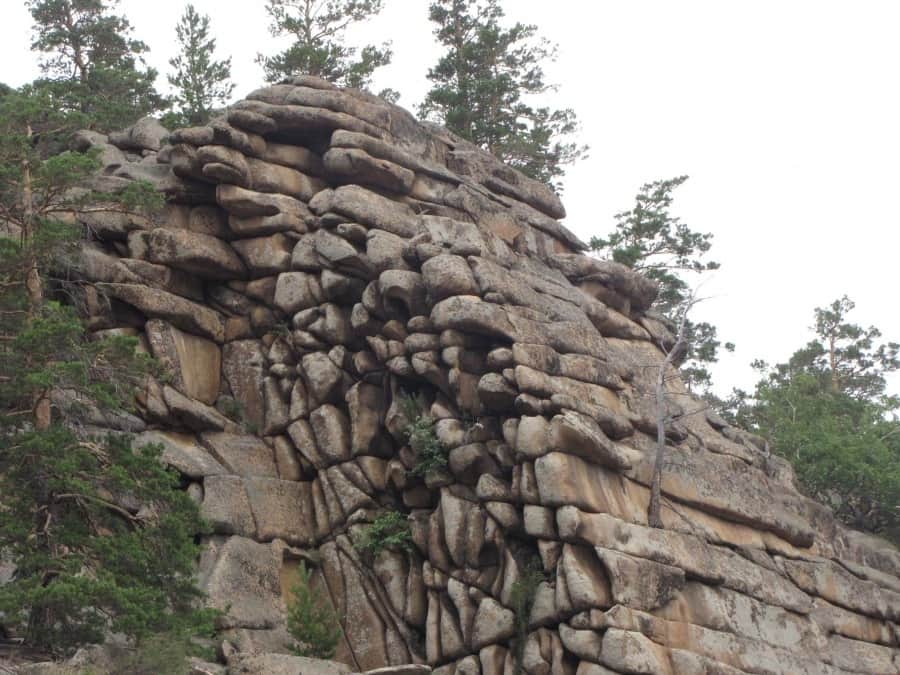
Moreover, the layers often look more like "pasta" rather than "pancakes". Hence we can assume that those stone flowed in jets, which raises serious doubts about the likelihood of such a strange behavior of lava with the usual eruption.
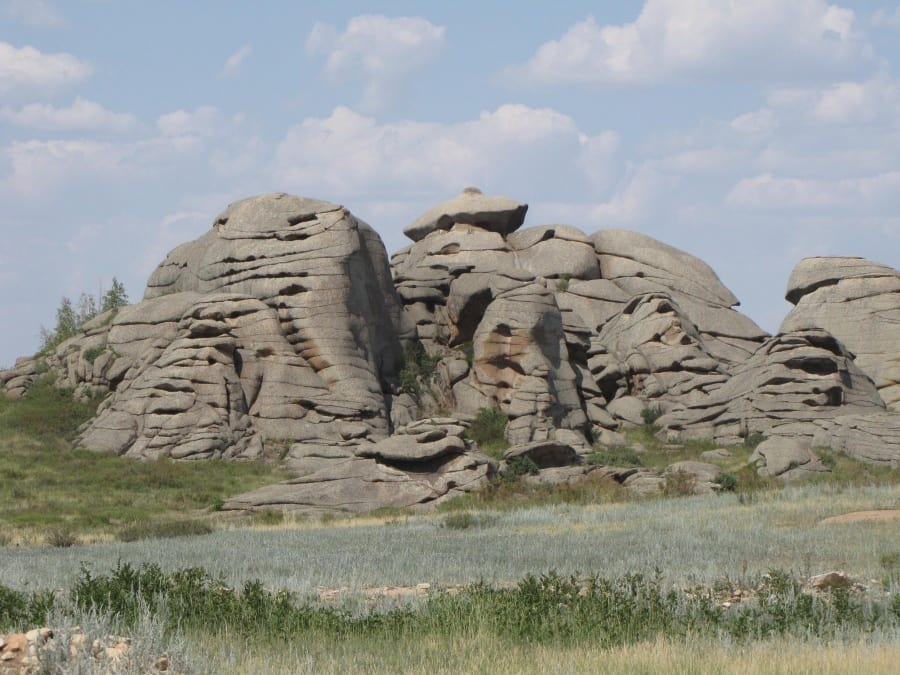
Some objects look as if they were still in semi-liquid, pastelike state, filled with some containers or structures that completely collapsed in time, leaving only a reminder of themselves in the form of holes and caverns on the body of hardened mass that eventually turned into rocks. This assumption gives us the right to assert that, being in a pastelike state, the stone was not hot!
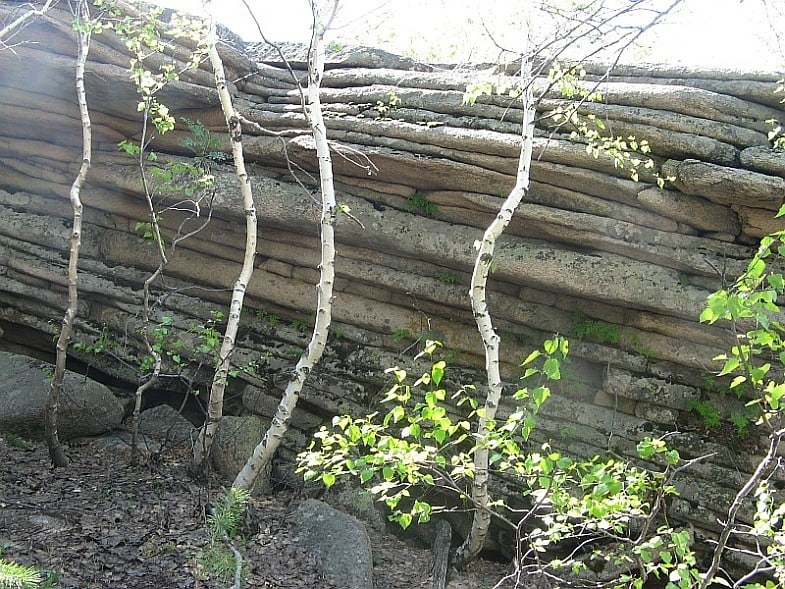
As for this picture, so there are no questions. This is a sandstone again, "hello" from the sea Tethys. Of course this stone was not hot. Why not assume that the granite remnants were originally a cold water suspension?
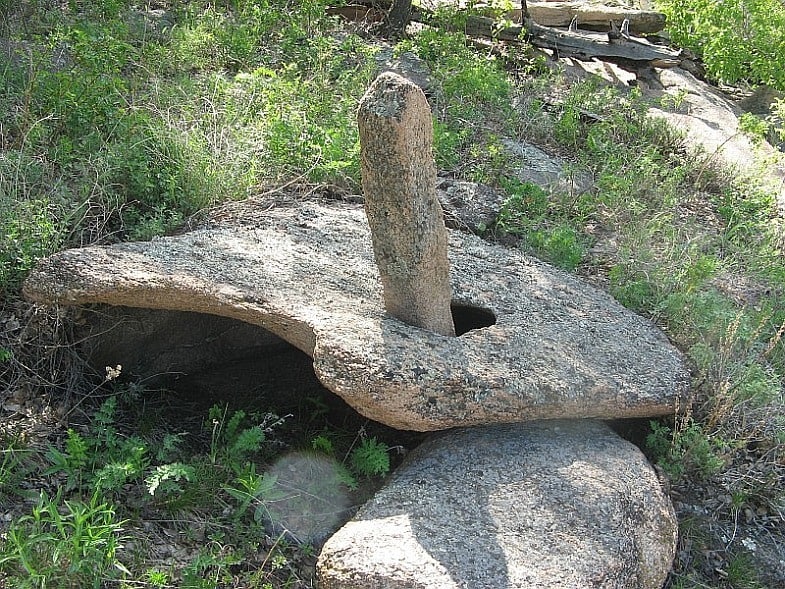
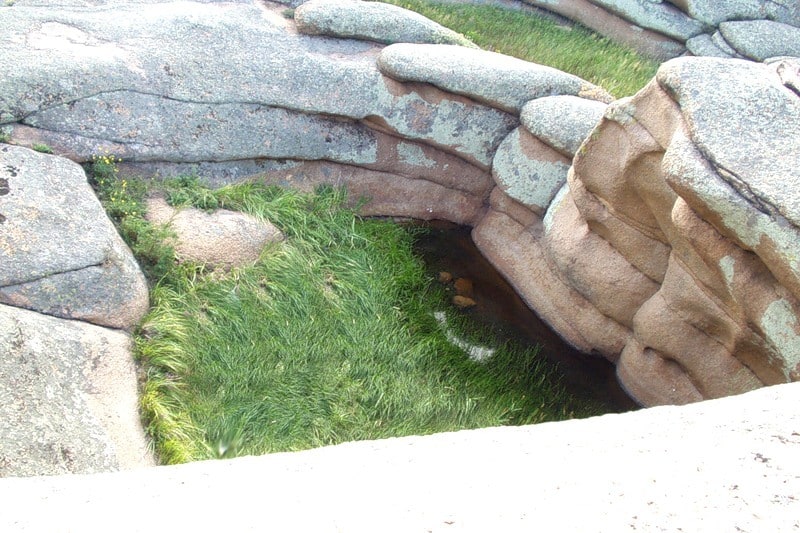
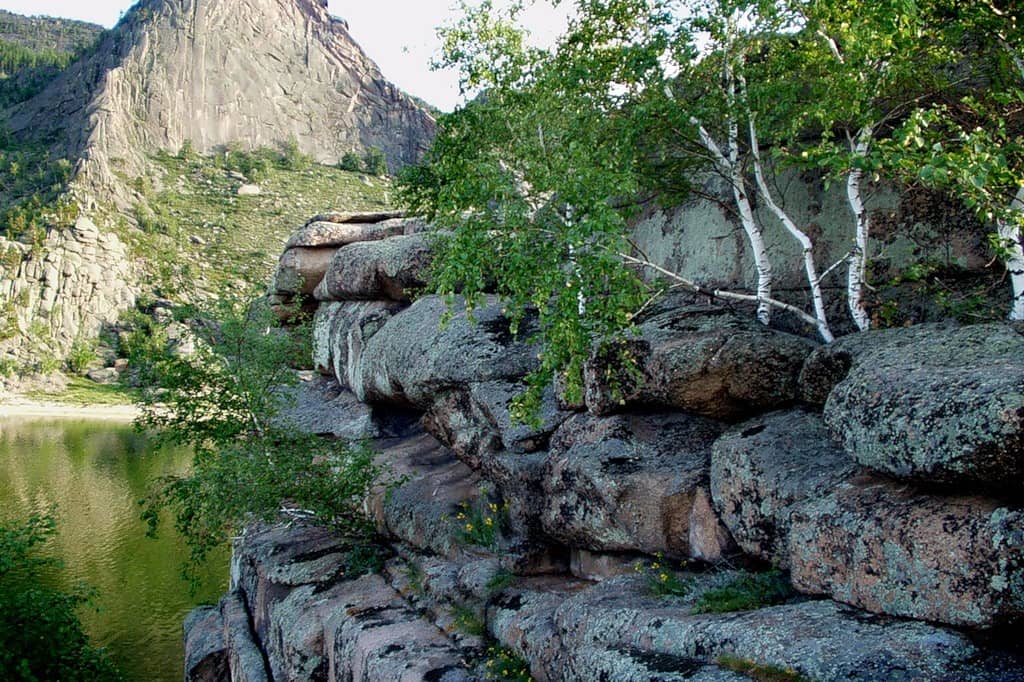
In our case, it makes no sense even to argue about the nature of the stonework. Throughout time, numerous amounts of external factors and processes could have influenced these stones, so it is almost impossible to say what exactly happened there at an exact moment of time. This nature reserve has been forming for ages, and it is still forming.
Therefore, this photo shows us a simple handmade stonework, made without mortar. But don't rush with conclusions about the traces of some ancient culture. These structures can easily turn out to be some temporary fortifications made by first Russian settlers in Turkestan, who used the resoruces the could find around them. It is surely much easier to fill the space between two rocks with smaller stones, rather than build the entire wall from scratch.
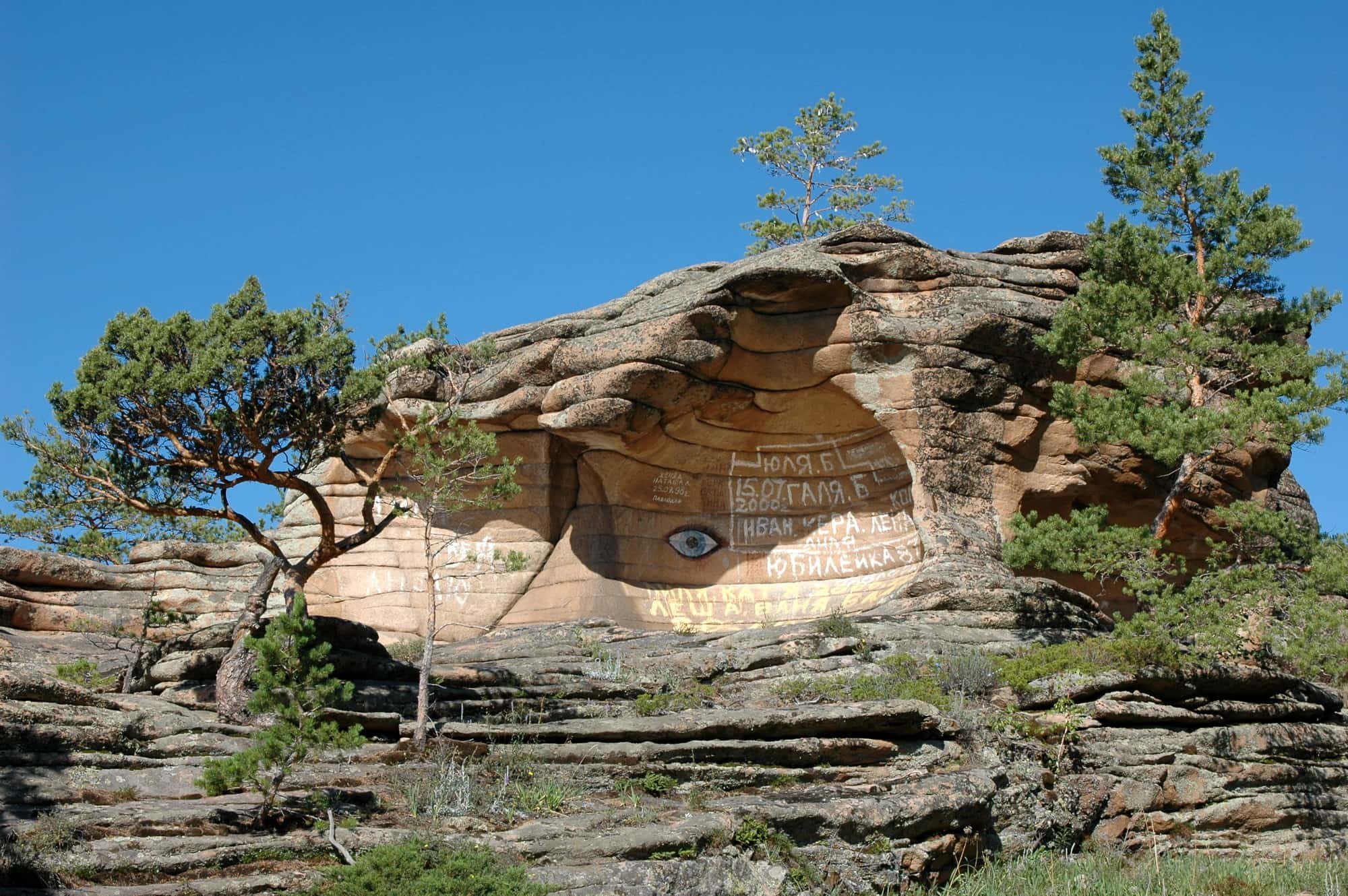
Here is another vivid example of the fact that a paste, consisting of small fractions of mountain minerals (similar to granite), has flooded a certain object, capacity, or even a small building, similar in shape to the cult structures that are typical of southeast Asia and Hindustan. Eventually, this structure completely disintegrated into ashes, and the petrified paste remained with an internal cavity, exactly repeating the outer contours of this structure. After all, stone is one of the strongest and most durable materials on our planet (including some alloys of various metals).
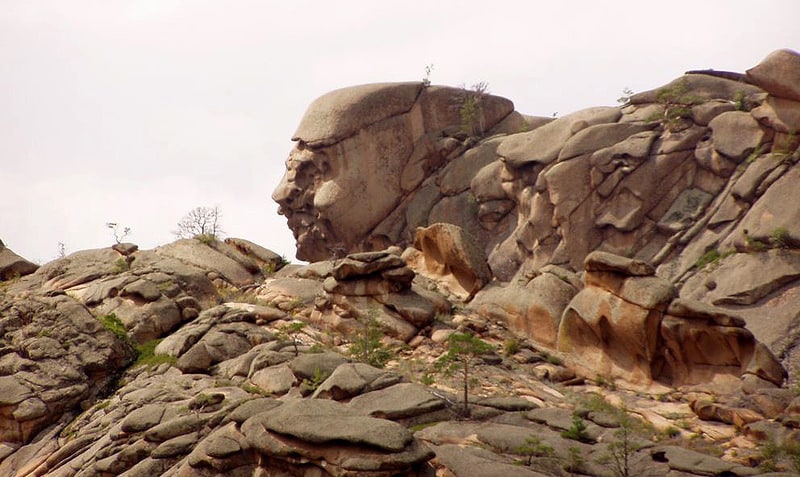
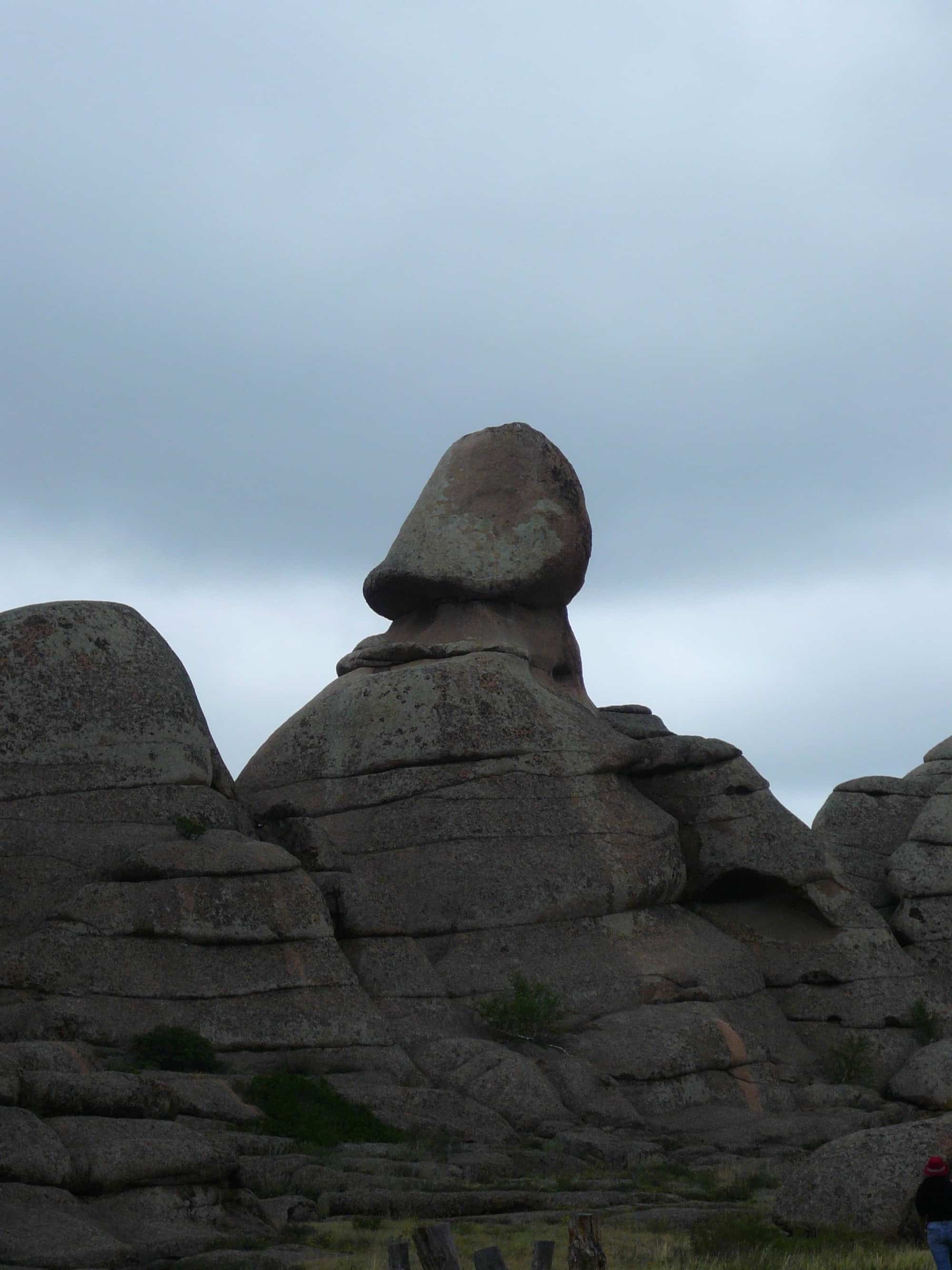
Looks very similar to a sculpture, but in fact just an accidental resemblance.
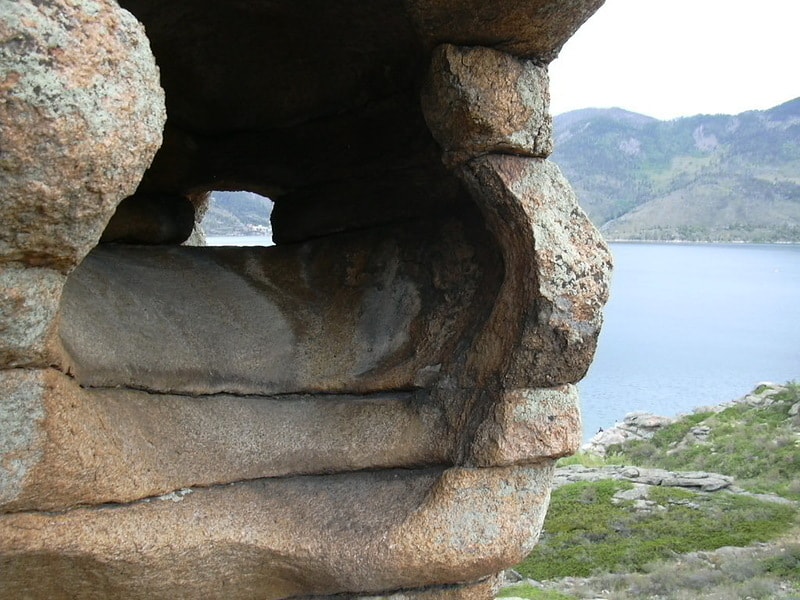
The same thing again. This is not a work of a stone-cutter, it's an example of weathering of stone that is less resistant to erosion. We will never find out what it looked like before getting filled with layers of paste, saturated with grains of minerals, because the particles of this material, which could have been preserved on the inner walls of the cavity, have long been blown away by the wind along with part of the stone's surface.